23 January, 2026
contents
Key Summary
- Blue Mind describes measurable psychological and physiological effects of being near water, influencing mental clarity, emotional balance and long-term wellbeing.
- Nest investing is the emerging investment mindset that prioritises wellbeing, longevity and resilience in residential assets.
- Waterfront properties aligned with these principles show stronger retention, desirability and resilience, shifting the definition of value in luxury real estate.
Introduction
Luxury real estate is entering a new phase of evaluation. As global uncertainty grows and lifestyles become more complex, high-end residential assets are no longer assessed solely by location, scale or finishes. Wellbeing has moved to the centre of decision-making. UHNW individuals increasingly seek homes that support mental clarity, reduce stress and remain relevant over long holding periods.
Within this context, two concepts are shaping how value is understood. Blue Mind explains, through science, how proximity to water supports emotional balance and cognitive calm. Nest investing applies this insight to real estate, framing the home as a resilient asset designed to safeguard wellbeing, time and family legacy. Together, they point to a shift where space, air and water become strategic drivers of long-term value.

What is Blue Mind?
Blue Mind is a framework developed by marine biologist Wallace J. Nichols, articulated in his book Blue Mind.
It is built on decades of scientific research from neuroscience, stress physiology and environmental psychology. Blue Mind explains that proximity to water places the brain in a calmer, more focused and restorative state.
This state is associated with:
- Reduced stress responses.
- Increased dopamine and serotonin.
- Improved emotional regulation.
- Enhanced cognitive clarity and creativity.
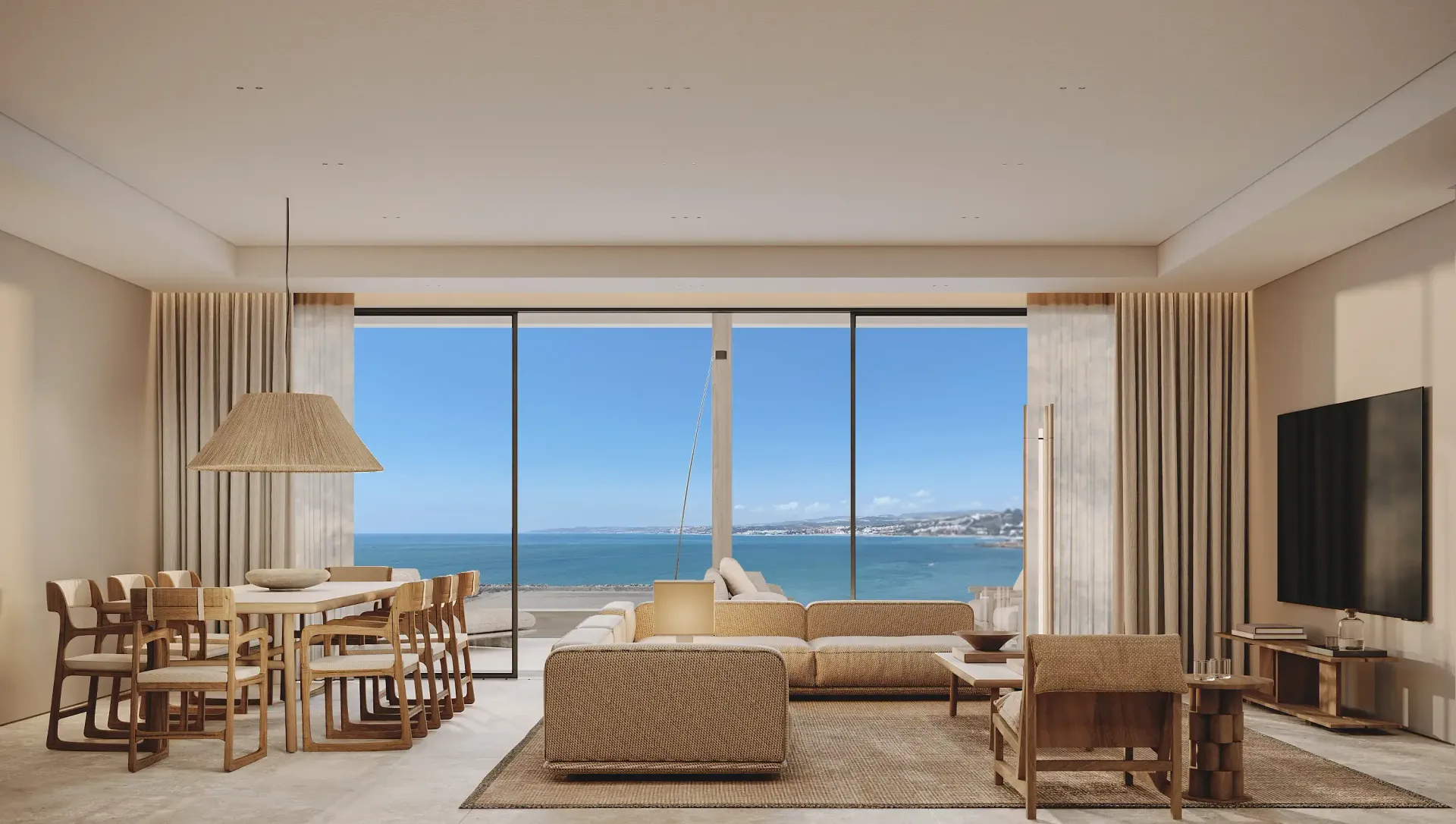
These effects appear not only with direct interaction (swimming, boating, immersion) but also through daily visual and sensory exposure to water — from a terrace, a view or a coastal horizon.
Blue Mind is not a trend or slogan. It is a way to articulate how human biology reacts consistently to aquatic environments. Its relevance grows as investors start to think of homes as environments that support mental and physical function.
What is nest investing?
Nest investing describes an investment mindset where the home is treated as a resilient, multi-purpose asset, rather than a speculative or purely financial instrument.
This mindset shifts focus toward properties that:
- Support physical and mental wellbeing.
- Reduce operational and cognitive burden.
- Remain functional and desirable across generations.
- Align with the long-term emotional and biological needs of occupants.
Nest investing recognises that a residence can generate value not only through capital appreciation, but also through the ongoing contribution it makes to daily wellbeing, clarity and life satisfaction.
This prioritisation reflects a broader shift in luxury real estate valuation among UHNW investors who increasingly rank wellbeing alongside traditional metrics such as location, build quality and exclusivity.

How do Blue Mind and nest investing connect?
Blue Mind and nest investing converge in one key insight: environments that support mental and physiological balance enhance long-term residential value.
Blue Mind supplies the scientific explanation: water and certain landscapes activate biological pathways that reduce stress and support emotional equilibrium.
Nest investing applies this insight to investment logic: properties that activate these pathways become durable assets in portfolios where wellbeing, clarity and resilience are part of the value equation.
In this view:
- Water ceases to be a decorative amenity.
- It becomes an element of biological infrastructure, shaping mental and physical health.
- Homes are evaluated for the quality of lived experience, not just financial return.
- This intersection is redefining decision-making criteria in luxury real estate markets.
What does science reveal about water’s impact?
Blue Mind theory draws on a large body of research that connects proximity to water with specific psychological and physiological effects.
Psychological outcomes
Research consistently shows that exposure to blue spaces:
- Improves mood and decreases negative emotions such as stress and anxiety.
- Enhances long-term wellbeing, particularly in terms of meaning and emotional balance (eudaimonic wellbeing).
- Promotes calm attention and cognitive clarity.
These mechanisms operate even when water is present in the visual field — through views from windows, terraces or open horizons.
Physiological outcomes
Water exposure has been linked to:
- Lower levels of cortisol (the primary stress hormone).
- Increases in dopamine and serotonin, which support motivation and emotional regulation.
- Reduced heart rate and quicker recovery from stress responses.
From a biological standpoint, these effects point to environments that do more than please the eye: they modulate human systems toward equilibrium.
This body of evidence helps explain why waterfront environments are repeatedly described as restorative, calming and “effortlessly engaging” by residents across cultures.

Why does wellness matter to luxury buyers?
Wellbeing is now a significant priority for luxury property buyers.
Surveys of prospective homebuyers show that wellness and health-related features influence decision-making for a growing majority. According to data referenced by property industry analysts, 73% of homebuyers say health impacts will be a factor in choosing their next property.
This figure rises sharply within the luxury segment, where spaces that actively support balanced living, restorative environments and sensory calm are no longer optional characteristics — they are expected fundamentals.
Across Europe and globally, expert advisors report that buyers of premium properties increasingly prioritise:
- Quality of outdoor and natural spaces.
- Integration of natural light and air quality.
- Environments that support physical and mental balance.
- Settings that function as a sanctuary from overstimulation.
These preferences are clear signals: the market is pricing wellbeing as a driver of sustained demand, not just lifestyle enhancement.

How does water influence long-term property value?
The link between water and value is visible in market data.
According to the Knight Frank Prime Waterfront Index, prime waterfront properties globally command an average 60% premium over inland equivalents. More specific aquatic features drive further uplift:
- Private slipways: average value increase of +115%.
- Private moorings: +104% uplift.
- Jetties and pontoons: between +89% and +100%.
- Estuary locations: average +85% uplift.
Keep in mind: these figures reflect price at transaction. When wellbeing-linked attributes drive demand, they can also enhance:
- Retention and occupancy stability.
- Emotional attachment and long holding periods.
- Resilience to market cycles.
In other words, water-facing properties don’t just command higher initial prices. They tend to perform better as lived environments, which in turn supports sustainable demand and market relevance over time.
Redefining luxury with science and strategy
The future of luxury real estate is emerging at the intersection of scientific insight and investment sophistication.
Blue Mind provides a clear, evidence-based explanation for why water has such a powerful impact on human biology. Nest investing translates this insight into practical criteria for residential assets that deliver resilience, clarity and long-term relevance.
Water, space and air, once aesthetic preferences, are now measurable contributors to value. For investors who prioritise wellbeing, clarity and family legacy, these attributes are becoming defining elements of strategic property decisions.
Luxury real estate in 2026 is not just about owning a home. It is about owning environments that nourish the human spirit and sustain the human body.
FAQ
What is Blue Mind in luxury real estate?
Blue Mind refers to the scientifically supported mental state associated with proximity to water. In luxury real estate, it explains how sea-facing and waterfront environments support mental clarity, emotional balance and long-term wellbeing, influencing property desirability and value.
What is nest investing in luxury real estate?
Nest investing is an investment mindset where the home is treated as a resilient, multi-purpose asset. It prioritises wellbeing, long-term usability, emotional attachment and family legacy over short-term speculation.
How are Blue Mind and nest investing connected?
Blue Mind provides the scientific explanation for why certain environments support wellbeing. Nest investing applies this knowledge to real estate decisions, favouring properties that reduce cognitive load and support long-term balance and retention.
Do waterfront luxury properties hold value better over time?
Yes. Global data shows that prime waterfront properties command significant premiums and maintain long-term desirability. Beyond price, they often benefit from stronger retention, longer holding periods and resilience across market cycles.
How important is wellbeing for UHNW real estate buyers?
Wellbeing has become a decisive factor. Industry research shows that more than 70% of buyers consider health and wellbeing features when choosing a property, with even higher relevance among UHNW investors.
Does Blue Mind design influence resale value?
Properties aligned with Blue Mind principles often attract sustained demand due to their impact on daily wellbeing. This supports value durability, emotional attachment and long-term relevance beyond location alone.
Are Blue Mind principles compatible with sustainability?
Yes. Blue Mind–aligned architecture often integrates natural light, air flow and passive cooling strategies, supporting energy efficiency while enhancing occupant wellbeing.
Why is nest investing accelerating among younger wealthy buyers?
Younger UHNW buyers prioritise stability, health and long-term use. As wealth transfers to Gen X and Millennials, homes that support wellbeing and act as safe, restorative environments gain strategic importance.
Is Blue Mind a scientific theory or a concept?
Blue Mind is a concept introduced by marine biologist Wallace J. Nichols, based on established research in neuroscience, psychology and physiology. It translates scientific findings into a clear framework applicable to real-world environments
News & Insights